Contents:
- Understanding the Religious Basis for Hair Covering
- The Concept of Modesty in Islamic Teaching
- Gender-Neutral Modesty Principles
- Historical and Cultural Development
- Regional Variations and Cultural Practice
- Middle Eastern Styles
- South Asian and Southeast Asian Practices
- Western Muslim Communities
- Personal Choice and Agency
- A Reader’s Story
- Common Mistakes to Avoid
- The Role of Culture Versus Religion
- Modern Challenges and Contemporary Debates
- Legal and Social Restrictions
- Workplace and Education Considerations
- Practical Understanding: What Different Coverings Mean
- Frequently Asked Questions
- Is head covering mandatory in Islam?
- What does the Qur’an actually say about women covering their hair?
- Are Muslim women forced to wear head coverings?
- Do all Muslim women wear head coverings?
- How has the practice of head covering changed over time?
- Moving Forward: Respecting Diversity of Choice
Quick Answer
Muslim women cover their hair primarily based on religious teachings found in Islamic scripture (the Qur’an and Hadith), which instruct believers to dress modestly. The practice, called hijab, reflects principles of modesty, dignity, and spiritual focus. However, it’s crucial to understand that the extent and style of head covering varies significantly across cultures, regions, and individual interpretations—some women wear full headscarves, others partial coverings, and some interpret the requirement differently.
Understanding the Religious Basis for Hair Covering
The tradition of why Muslim women cover their hair stems from interpretations of Islamic scripture rather than a single, universal decree. The Qur’an, Islam’s holiest text, contains verses that address modesty for both men and women. Verse 31 from Surah An-Nur (Chapter 24) instructs believers: “Tell the believing women to reduce their gaze and guard their chastity; not to display their adornments except what appears of them; and to draw their veils over their bosoms.” Islamic scholars interpret this passage as establishing a framework for modest dress, though the precise implementation has evolved across different Muslim communities.
The Hadith—sayings and practices of the Prophet Muhammad—further reinforces modesty principles. These prophetic traditions provided guidance to early Muslim communities about how believers should dress in public. While neither the Qur’an nor Hadith uses the word “hijab” specifically to mean a headscarf, Islamic jurisprudence developed detailed understandings of these verses over centuries. Different schools of Islamic law (madhabs) emerged, each with slightly different interpretations of what “drawing the veil” entails.
It’s important to note that not all Islamic scholars agree on whether head covering is an absolute obligation (fard), a strongly recommended practice (sunnah), or a matter of cultural tradition. This theological debate continues within Muslim communities globally, which explains the remarkable diversity in practice.
The Concept of Modesty in Islamic Teaching
At its core, the practice of head covering connects to the broader Islamic principle of modesty. This principle applies to both men and women, though the requirements are understood differently. Islamic teaching emphasizes that believers—regardless of gender—should dress in ways that protect dignity and reduce unnecessary distraction in social contexts.
Gender-Neutral Modesty Principles
The Qur’an addresses men before women on the subject of modesty. Verse 30 of Surah An-Nur instructs men to “reduce their gaze and guard their chastity.” This sequence matters: Islamic teaching positions modesty as a mutual responsibility. Men are expected to control their gaze and behaviour; women are expected to dress modestly. The covering of hair, therefore, doesn’t solely represent women’s responsibility—it’s part of a broader framework requiring conscious, respectful behaviour from all members of society.
Many Muslim women explain their choice to cover as an expression of this principle rather than an external imposition. They describe it as a way to be seen for their intellect, character, and accomplishments rather than their physical appearance. This perspective challenges Western stereotypes that automatically associate head covering with oppression.
Historical and Cultural Development
Head covering wasn’t unique to Islam when the religion emerged in the 7th century. Byzantine Christian women, Jewish women, and women in various Mediterranean and Middle Eastern societies wore veils or head coverings as markers of respectability and status. Arab women before Islam also practiced forms of veiling. Islam incorporated existing cultural practices but framed them within explicit religious principles of modesty and dignity.
Over the past 1,400 years, the styles, materials, and extent of covering evolved based on local climates, economic circumstances, and cultural traditions. Afghan burqas, Iranian chadors, Egyptian hijabs, Turkish headscarves, and Malaysian tudungs all represent different cultural expressions of the same underlying Islamic principle. This diversity demonstrates that head covering isn’t a monolithic practice—it’s deeply influenced by regional context.
Regional Variations and Cultural Practice
Walking through different Muslim-majority countries reveals stunning variety in how women approach head covering. A woman in Cairo might wear a fitted hijab that frames the face. A woman in rural Afghanistan might wear a burqa with a mesh screen over the eyes. A woman in Malaysia might wear a colourful tudung with modern fashion. A woman in Turkey might wear a headscarf that leaves the face fully visible. These aren’t different religions—they’re the same religion expressed through different cultural lenses.
Middle Eastern Styles
In Egypt and the Levantine countries, the hijab—a rectangular scarf wrapped to cover the hair, neck, and sometimes shoulders—is the most common style. In Saudi Arabia and other parts of the Gulf, more conservative coverings including abayas (long cloaks) are traditional. Iran mandates head covering by law, and many Iranian women wear chadors, a semicircular fabric draped over the body. Iraq, Syria, and Palestine each have their own predominant styles shaped by local history and preference.
South Asian and Southeast Asian Practices
In Pakistan and Bangladesh, many Muslim women wear the dupatta—a long scarf that’s worn both for modesty and as a cultural fashion statement. In Malaysia, the tudung (colourful headscarf) is widely worn with contemporary fashion rather than traditional dress. In Indonesia, Muslim women’s dress varies enormously, from minimal head covering in cosmopolitan Jakarta to more extensive covering in conservative regions. These variations show how Islam adapts to and integrates with local cultural identity.
Western Muslim Communities
Muslim women living in Western countries—including the UK, Europe, North America, and Australia—navigate head covering as both a religious practice and a visible identity marker. Some choose traditional styles like the hijab or niqab; others wear more subtle coverings like hats or headbands; many don’t cover at all. These women often report complex motivations: religious conviction, cultural connection to heritage, personal preference, and response to their environment all factor into individual decisions.
Personal Choice and Agency
A crucial element often missing from Western discussions is the agency and choice of Muslim women themselves. Surveys and interviews across Muslim-majority and Muslim-minority countries show that many women choose to wear head coverings based on personal conviction. In countries where covering isn’t legally mandated, millions of women still choose to wear hijabs.
Conversely, many Muslim women choose not to wear head coverings, and this choice is equally valid within Islamic practice. Progressive Muslim scholars and communities interpret modesty requirements more liberally. Some argue that in contemporary society, the principle of modesty can be achieved through other means—appropriate clothing choices, professional behaviour, and respect for others—without head covering being necessary.
A Reader’s Story
Consider the experience of Amira, a British-Pakistani woman who works as a software engineer in Manchester. She didn’t wear a hijab until university, where she studied Islamic theology as an elective. Reading the original texts herself rather than relying on her parents’ interpretation deepened her understanding. She chose to start wearing a hijab at age 21—a decision that surprised her family, who had never pressured her. “I realised it wasn’t about tradition or what people expected,” she explains. “It was about my relationship with my faith and how I wanted to present myself to the world.” For Amira, the choice was empowering, not restrictive. Yet she emphasises that her path isn’t everyone’s path: her sister, equally Muslim, equally educated, chooses not to cover. Both decisions are respected within their family and faith community.
Amira’s experience illuminates an important reality: head covering is often a more complex, individual decision than outsiders assume. It connects to personal spirituality, cultural identity, family dynamics, local context, and individual interpretation of religious texts.
Common Mistakes to Avoid
When discussing why Muslim women cover their hair, several misconceptions persist that obscure understanding:
- Assuming all Muslim women wear head coverings: Millions of Muslim women worldwide choose not to wear hijabs, niqabs, or other head coverings. Islam is practiced across 195+ countries with enormous demographic and cultural diversity.
- Conflating covering with oppression: While oppression certainly exists in some contexts where women are forced to cover against their will, many women experience head covering as a choice aligned with their values. Automatically assuming women who cover are oppressed denies their agency and lived experience.
- Viewing it as solely a religious requirement: Head covering operates simultaneously as a religious practice, cultural tradition, political statement, and personal choice. Reducing it to one dimension misses the complexity.
- Treating all head coverings as identical: A hijab, niqab, chador, burqa, and tudung are fundamentally different garments with different coverage levels, cultural meanings, and regional associations.
- Ignoring theological diversity: Islamic scholars disagree about whether head covering is obligatory, recommended, or permissible. This isn’t because Islam is unclear—it’s because Islamic jurisprudence allows for multiple valid interpretations.
The Role of Culture Versus Religion
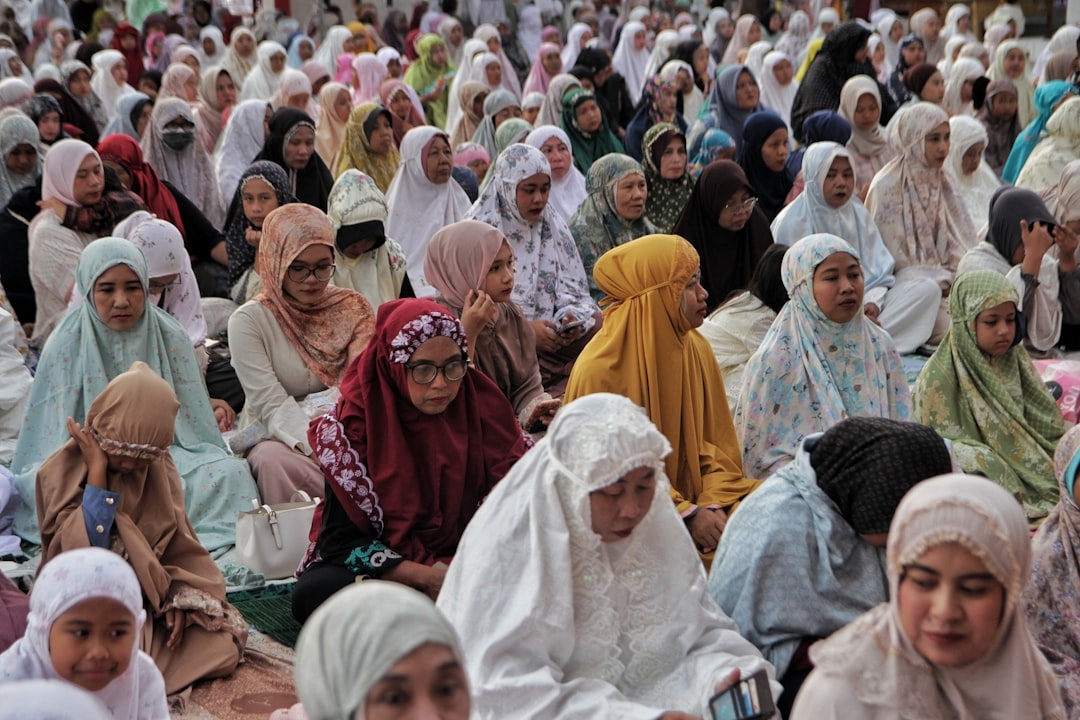
Separating culture from religion in this practice proves difficult—perhaps impossible. When a practice has existed for 1,400 years across dozens of cultures, the two become inseparably intertwined. Yet the distinction matters for understanding.
The religious core is the Islamic principle of modesty for all believers. The cultural expression varies: materials available, climate, fashion traditions, and social norms all shape how modesty is expressed. Arab women might wear colourful embroidered hijabs; Afghan women might wear indigo-blue burqas; Somali women might wear printed scarves; Turkish women might wear understated headscarves with contemporary clothing.
Where coercion enters—when fathers, brothers, or governments force women to cover against their will—this represents a cultural or political problem rather than a purely religious one. Many Muslim scholars explicitly state that Islamic head covering requires free choice and cannot be legitimately forced. The practice is valid only when women voluntarily participate.
Modern Challenges and Contemporary Debates
In 2026, Muslim women navigate head covering within complex modern contexts. Some face discrimination for wearing visible Islamic dress in secular societies. Others face pressure from both conservative family members and their own communities. Still others reclaim the practice as an act of resistance against Western cultural imperialism.
Legal and Social Restrictions
Several European countries have restricted certain forms of Islamic dress. France has banned full-face coverings (niqab and burqa) in public spaces since 2010, though this law primarily affects a tiny percentage of women. Austria, Denmark, and the Netherlands have similar restrictions. Conversely, some Muslim-majority countries mandate head covering or restrict women’s employment if they don’t comply. These legal frameworks show how head covering becomes caught between religious principle, cultural tradition, personal preference, and state power.
Workplace and Education Considerations
In the UK and Europe, Muslim women increasingly assert the right to wear head coverings in professional environments. Teachers, nurses, police officers, and business professionals wear hijabs whilst performing their duties. This represents a significant social shift from the 1990s and early 2000s, when some organisations explicitly restricted religious dress. The European Court of Human Rights has addressed several cases, sometimes supporting women’s right to wear headscarves in professional settings and sometimes allowing employers to impose dress codes in the name of neutrality or safety.
Practical Understanding: What Different Coverings Mean
For those unfamiliar with Islamic dress, understanding the terminology clarifies discussions:
- Hijab: The most common term, referring to both the headscarf worn by Muslim women and the broader concept of modesty. A hijab typically covers the hair, ears, and neck, often leaving the face visible.
- Niqab: A veil covering the entire face except for a slit for the eyes. It’s worn with an accompanying headscarf and is practised primarily in Gulf countries, though some women in other regions choose it.
- Chador: A large semicircular fabric draped over the head and body, held closed in front. Common in Iran and some other regions, often worn with other clothing underneath.
- Burqa: The most extensive covering, with a mesh screen over the eyes. Associated particularly with Afghanistan, though Afghan women wear various styles depending on personal preference and region.
- Al-Amira: A two-piece veil covering the body and face (with eye openings), sometimes called a half-niqab or Saudi-style niqab.
These distinctions matter because they reflect different cultural traditions and different levels of face coverage. A conversation about niqab restrictions, for instance, affects perhaps 0.5% of Muslim women globally, yet Western media sometimes treats it as though the practice were universal.
Frequently Asked Questions
Is head covering mandatory in Islam?
Islamic scholars hold different opinions. The majority of traditional scholars consider modest dress—including hair covering—obligatory for women, based on Qur’anic verses. However, progressive scholars argue the fundamental requirement is modesty in dress and behaviour, which can be achieved various ways. The diversity of practice across Muslim communities reflects these genuine theological differences, not confusion about Islam’s teachings.
What does the Qur’an actually say about women covering their hair?
The Qur’an doesn’t explicitly use the word “hijab” to mean headscarf. Qur’an 24:31 instructs believing women to “draw their veils over their bosoms” and “not display their adornments.” Different Islamic scholars interpret this as requiring head covering, whilst others view it as requiring general modesty. The ambiguity reflects the text’s historical context and has generated 1,400 years of scholarly discussion.
Are Muslim women forced to wear head coverings?
In some contexts, yes. Governments like Iran mandate covering, and some families enforce it culturally or through pressure. However, in most Muslim-majority countries, head covering is a choice. In Muslim-minority countries like the UK, it’s entirely voluntary. Many Muslim women experience it as personally meaningful rather than coercive. Conversely, some women report family or social pressure to stop covering. The experience varies dramatically based on individual, family, and cultural circumstances.
Do all Muslim women wear head coverings?
No. Millions of Muslim women worldwide choose not to cover their hair. Some interpret Islam differently; others prioritise other religious practices; some live in secular communities where covering isn’t part of their identity expression. Islam is practised across diverse cultures by 1.9 billion people with enormous variation in practice.
How has the practice of head covering changed over time?
Styles, materials, and prevalence have shifted significantly. In early Islamic history, covering was associated with social status and respectability. As Islam spread across continents, local styles evolved. The 20th century saw significant changes: some Muslim countries discouraged covering (Turkey, Egypt under certain periods), whilst others maintained or emphasised it. Contemporary globalisation has created new styles blending tradition with modern fashion. The practice is dynamic rather than static.
Moving Forward: Respecting Diversity of Choice
Understanding why Muslim women cover their hair requires abandoning simplistic narratives. The practice isn’t monolithic, universal, or simply imposed. It emerges from religious teachings, cultural traditions, individual choices, and sometimes coercion or pressure. These elements interact differently for each woman.
The most respectful approach acknowledges this complexity. It recognises that a woman wearing a hijab might be doing so for spiritual reasons, cultural connection, personal preference, family tradition, professional choice, or political statement—often combinations of these. It also recognises that women who choose not to cover are equally valid in their Islamic practice.
For those curious about this practice in 2026: listen to Muslim women themselves. Read accounts from women across different regions, backgrounds, and levels of religiosity. Notice how their motivations vary. Recognise that debate and disagreement exist within Muslim communities about optimal practice. Most importantly, extend respect for women’s choices regardless of what you might personally choose.
The question “Why do Muslim women cover their hair?” ultimately points not to a single answer but to the rich, diverse ways that Muslims globally navigate faith, culture, modesty, and identity. That complexity deserves respect.