Contents:
- Hair Colour Genetics: How Inheritance Works
- What Colour Hair Will My Baby Have Based on Parent Hair Colours
- Two Brown-Haired Parents
- Brown-Haired Parent and Blonde-Haired Parent
- Two Blonde-Haired Parents
- Red-Haired Parents
- Hair Colour Changes During Infancy and Childhood
- When Does Baby Hair Colour Stabilise?
- Hair Colour vs. Eye Colour: Commonly Confused Patterns
- Common Mistakes to Avoid
- Genetic Testing and Hair Colour Prediction
- FAQ: Baby Hair Colour Questions
Approximately 70% of babies with darker skin tones are born with dark hair, yet roughly 80% of babies of Northern European descent arrive with lighter hair than they’ll eventually have as toddlers. Hair colour at birth doesn’t predict final hair colour—this surprises many parents expecting their baby’s hair to remain unchanged. Understanding genetic inheritance helps predict what colour hair will my baby have throughout their development.
Hair Colour Genetics: How Inheritance Works
Hair colour is controlled by multiple genes, not just one, making prediction more complex than simple dominant-recessive inheritance. The primary genes involved—MC1R, HERC2, and OCA2—influence melanin production and distribution in hair. Melanin comes in two types: eumelanin (browns and blacks) and pheomelanin (reds and yellows). The ratio and quantity of these pigments determine final hair colour.
Each parent contributes two copies of genes controlling hair colour, meaning your baby inherits genetic information from both parents’ entire family history, not just their current hair colour. A brown-haired parent carrying genes for blonde hair can pass those genes to their child. This explains why blonde babies appear in dark-haired families, or red-haired babies arrive from parents without red hair anywhere in recent memory.
What Colour Hair Will My Baby Have Based on Parent Hair Colours
Two Brown-Haired Parents
Brown-haired parents most likely produce brown-haired children—approximately 75% probability. However, 20% of brown-haired parents carry recessive blonde genes, meaning their child could be blonde. Red hair appears rarely (2-5% probability) if both parents carry red hair genes. Dark hair typically emerges within months after birth or is present at birth in darker-skinned babies.
Brown-Haired Parent and Blonde-Haired Parent
Outcomes vary widely. Brown hair is generally dominant, so brown-haired children appear in approximately 50% of cases. However, 50% of children could be blonde or light brown, depending on whether the brown-haired parent carries recessive blonde genes. If the brown-haired parent carries red genes, red-haired children may appear (2-5% probability).
Two Blonde-Haired Parents
Two blonde parents carry primarily recessive genes. Their children are almost certainly blonde (95%+ probability). Occasionally—particularly if both parents carry some melanin-producing genes—light brown or darker-blonde children result. Red hair is extremely unlikely (less than 1% probability) unless both parents carry red genes.
Red-Haired Parents
Red hair is recessive, requiring two red-hair genes for expression. Two red-haired parents produce exclusively red-haired children. A red-haired parent and a brown or blonde parent produce approximately 50% red-haired children (those inheriting the red gene from the red-haired parent plus a red gene from the other parent) and 50% non-red children. Red-haired children sometimes appear unexpectedly when both parents carry red genes but don’t express them—probability depends on whether the non-red parent actually carries the red gene.
Hair Colour Changes During Infancy and Childhood
Most dramatic hair colour changes occur before age three. Many light-skinned babies born with fine blonde or light brown hair progressively darken over months. This occurs because newborns produce less melanin than their genetic code allows. As melanin production increases during infancy, hair darkens. The darkening process slows after age two, with most significant changes completed by age three.
Darker-skinned babies often display their final hair colour within weeks of birth because they produce melanin immediately. Light-skinned babies may take longer to reach their genetic hair colour, sometimes until age two or three. This isn’t a fundamental change in genetics—it’s the visual expression of increasing melanin production.
When Does Baby Hair Colour Stabilise?
Hair colour typically stabilises by age three to five. Some individuals continue subtle darkening until puberty—approximately 20% of children show measurable hair darkening between ages five and twelve. Red hair sometimes becomes darker during these years, shifting from bright red to auburn or darker red. Blonde hair occasionally darkens into light brown during pre-teen years.
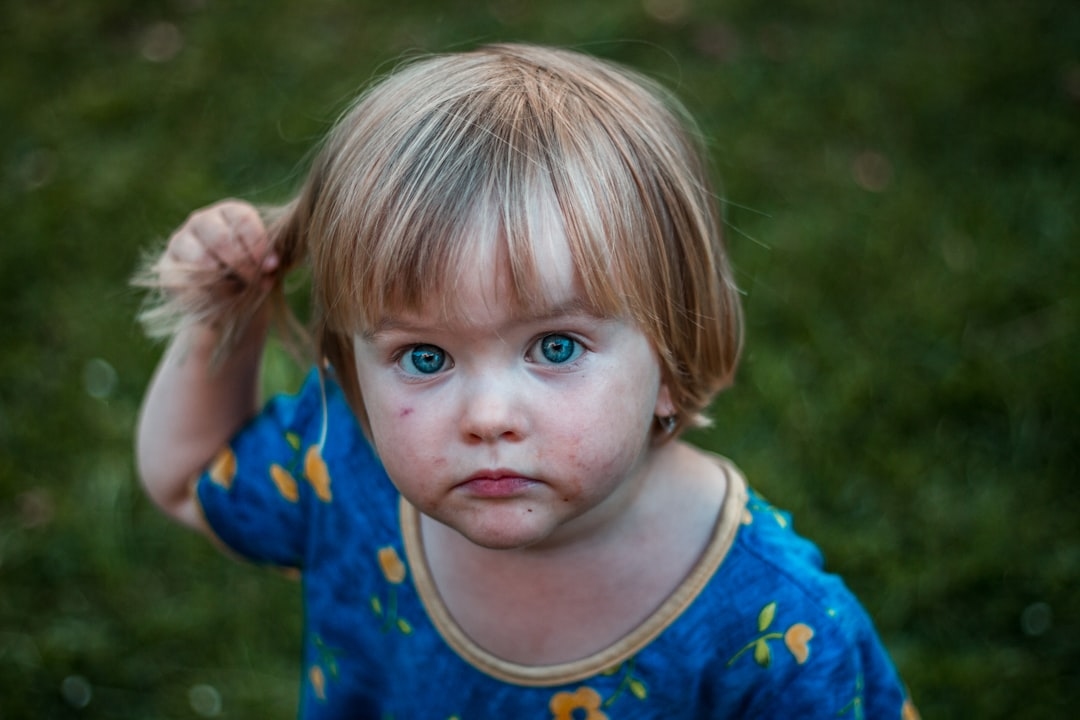
Puberty sometimes triggers hair colour changes again due to hormone fluctuations affecting melanin production. These changes are usually subtle—a slight shift in tone rather than dramatic transformation. By age 16 to 18, final adult hair colour has typically established.
Hair Colour vs. Eye Colour: Commonly Confused Patterns
Hair and eye colour follow different genetic patterns. Blue eyes don’t guarantee blonde hair; brown-haired children frequently have blue eyes at birth, which change later. The genes controlling these traits are independent. A baby with blonde hair and blue eyes will likely retain the eye colour but may darken to brown hair. Conversely, dark-haired babies with brown eyes may develop lighter hair but retain brown eyes. Don’t use eye colour to predict final hair colour.
Common Mistakes to Avoid
Assuming your baby’s birth hair colour represents their final colour creates disappointment. Most light-skinned babies’ hair darkens significantly during their first year. Patience is essential—reassess hair colour stability around age two or three, not at birth.
Another error: discounting genetic heritage beyond immediate parents. Your baby’s grandparents’ hair colours, and their parents’ hair colours, influence outcomes through genes passed down. A surprising blonde baby in a brown-haired family might reflect a grandparent’s genes expressing unexpectedly.
Obsessing over making predictions isn’t productive given the complexity. Multiple genes influence outcomes, environmental factors contribute, and individual variation is substantial. Rather than predicting precisely, understand the range of possibilities and enjoy your baby’s hair colour transformation.
Genetic Testing and Hair Colour Prediction
Commercial genetic testing services (£100 to £300 in the UK) can sequence the genes influencing hair colour, providing more accurate predictions than phenotype observation alone. However, even genetic testing cannot predict with absolute certainty because gene expression varies and environmental factors influence final appearance. For most families, observation over time is sufficient without expensive testing.
FAQ: Baby Hair Colour Questions
Will my blonde newborn stay blonde? Possibly, but 50% of light-haired newborns darken during their first year. Observe colour changes until age two or three before concluding final colour. Early hair predictions are unreliable.
Can two brown-haired parents have a blonde baby? Yes. Both parents might carry recessive blonde genes. Probability is approximately 20-25% if both parents carry these genes, lower if only one does.
What colour hair will my baby have if I’m brown-haired and my partner is red-haired? Approximately 50% brown-haired, 50% red-haired—assuming you carry red genes. If you don’t, most children will be brown-haired with a small percentage having reddish highlights.
Does baby hair colour change after birth? Yes. Most babies’ hair darkens during their first year or two. Some blonde babies become noticeably darker by age three. Darkening is most dramatic in the first year.
Will my baby’s hair lighten or darken during childhood? Most dramatic changes occur before age three. Some children continue subtle darkening until puberty. Major changes are unlikely after age five, though slight shifts in tone may occur.